

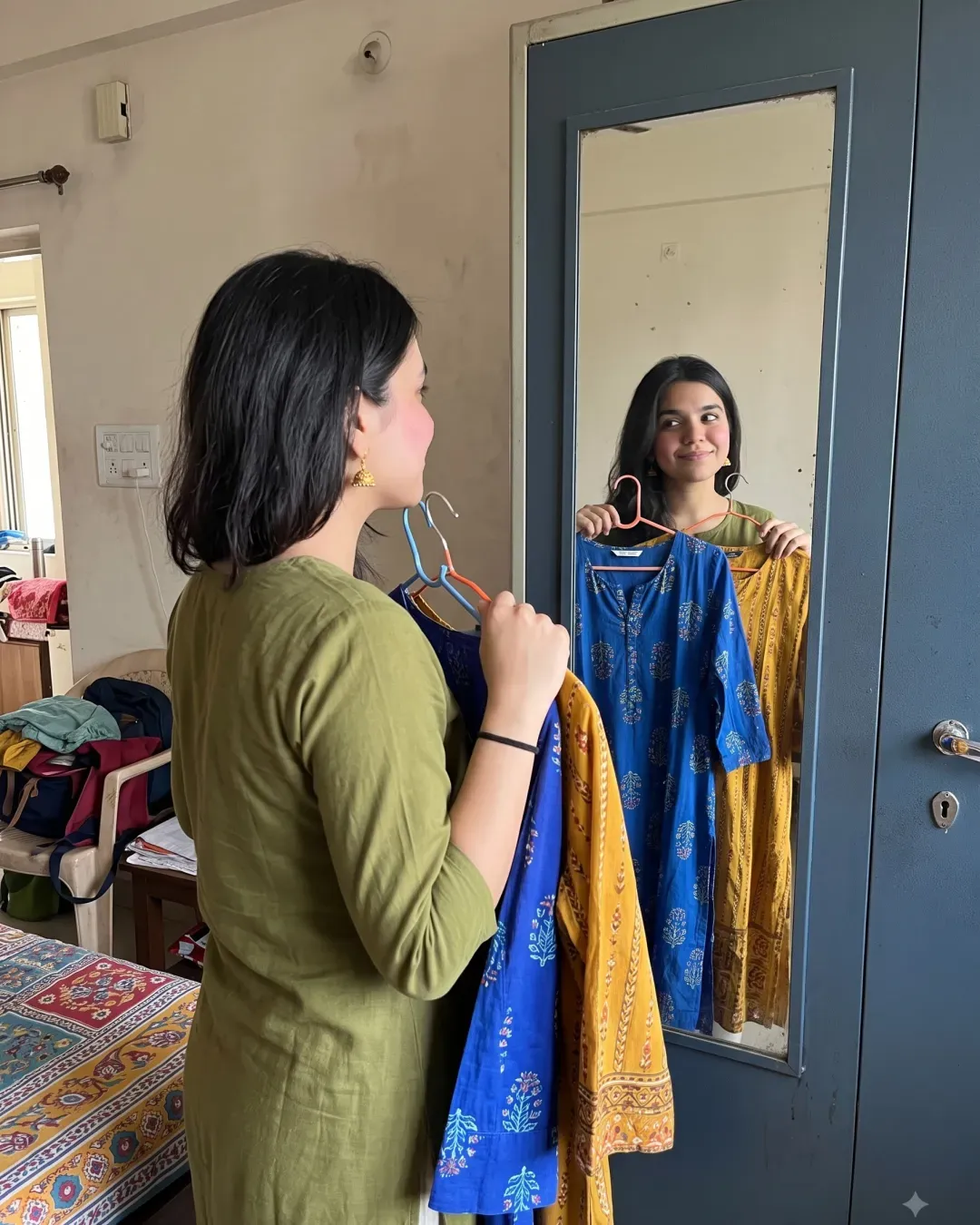
Hi, mi Rutu — and yes, I am virtual
Let us put the clearest sentence first: Rutu Sawant is an AI-generated virtual fashion creator, not a real person modelling clothes. The face, scenes and outfits you see here are digitally generated or styled. A real human team makes the editorial and publishing decisions. We put the AI disclosure in the header, footer and relevant content because it should not be a surprise hidden behind a tiny link.
Rutu’s Thane background, local-train routine and family are part of a fictional persona. They give the writing a familiar setting and voice. They are not evidence that a person has visited an office, taken a commute or used a product. You can enjoy the story while knowing exactly what kind of character is speaking.
A styling image is an idea, not a wear test
An image can help you imagine a navy-and-white combination or a festive colour palette. It cannot prove how an actual garment feels, fits or behaves after washing. AI can create a convincing texture without having any access to the fabric. It can also introduce details that do not exist in the real product. That is a limit to keep in mind whenever you browse.
For that reason, I do not claim to have physically worn, tried, tested or felt a product. The useful verbs here are styled, picked, found and spotted. If a human team member ever performs a real, documented check, that check would need its own clear description. A generated picture alone never becomes a first-hand product review.
Why the current looks say sample
The starter wardrobe contains seven sample looks. They demonstrate a visual direction and the sort of information the site intends to publish. Product names are generic, prices are illustrative, and stores have not been confirmed. Buying buttons stay disabled. This is deliberate: a convincing-looking card should not send you to an invented product or imply that stock has been checked when it has not.
Before a sample becomes a live shopping look, the team needs a real listing, current price, appropriate link and a check that the digital styling matches the product. Sample labels should only come off after that work. Some pieces may never become purchasable. A poll image, for example, can simply remain a conversation about two styling directions.
What a useful product note should contain
A helpful note starts with what the source actually says: garment composition, included pieces, measurements, care instructions and any relevant limitations. It should distinguish facts from styling suggestions and say when something has not been verified. “Check whether an inner is needed” is different from pretending that the team has physically tested opacity. The difference belongs in the wording.
Prices and availability can change after a post goes live. The date beside a look tells you when its price was recorded; it is not a promise that checkout will match forever. Check the retailer’s current price, seller and returns information before ordering. Delivery, tailoring and accessories can add to the amount shown for the clothing alone.
How affiliate links fit in
When live affiliate links are present, the team may earn a commission if you shop through them. The site will label those areas “#ad · affiliate links” above the product list. The disclosure is there to explain the commercial relationship before you click, not after. An affiliate relationship is not evidence of product quality and should not replace your own checks.
Some links may use the site’s short redirect route, while others may go directly to the retailer depending on programme rules. The team must check those rules before enabling real links. The current programme names on the disclosure page are setup placeholders, not claims of accepted partnerships. There are no active product recommendations hiding inside this explanatory post.
The size chart still gets the final word
If you take one practical habit from this site, let it be comparing measurements. Read whether a chart gives body or garment measurements, compare with something suitable you already own, and look for the dimensions relevant to the shape. A generic small, medium or large label cannot settle the question across different sellers and styles.
Consider the return window and any conditions before ordering, particularly for items that need tailoring. Customer images and reviews can offer clues, but they describe other people’s experiences. Your preferred ease and proportions may differ. A digital Rutu image cannot predict your fit, and no caption should suggest otherwise. It is inspiration beside the decision, not a replacement for information.
A little transparency is part of the style
The site asks before enabling optional analytics, and external Reel embeds load only after you choose to open them. Social channels, forms and brand statistics remain visibly unconfigured until real details are available. We would rather show “coming soon” than invent a community size or pretend a message was sent to an inbox that does not exist.
You should be able to tell where the story ends and the evidence begins. Read the disclosure page for the current setup, use the privacy page to understand planned data handling, and treat sample content as sample content. Rutu can be witty, Marathi, budget-minded and useful without pretending to be human. That is the whole idea: digitally styled, honestly shared, and always open about the difference.